

As a private chef, I always have a schedule when I am working. Because failing to plan is planning to fail! And when hosting at home, I have learned that good entertaining is often less about doing everything brilliantly and more about doing things in the right order. No host wants to be in the position where guests are arriving and the table isn't laid, the drinks aren't chilled and the meat is still defrosting. And this is one of the areas where AI can be genuinely useful. It takes the boring bits away and leaves you with the fun creative elements, as well as freeing you up to host and actually spend time with your guests.

A good cooking timeline turns a collection of recipes and jobs into a plan. It tells you what to do first, what can wait, what needs to be reheated and, crucially, when you need to stop cooking and go and get dressed.
Jump to:
- Start with your finished menu
- Top tip
- Create the day-of schedule
- Ask it for a prep list
- Ask AI to work backwards and include buffers
- Ask AI to identify clashes
- Don't forget plating
- Create an emergency buffer
- Create a "do not forget" list
- My master dinner party scheduling prompt
- The secret to a relaxed dinner party
- Comments
Here's how to use AI to create your own dinner party preparation schedule. If you want to go the extra mile and use AI for more than just the schedule, check out my guide to using AI to plan a whole dinner party.
Start with your finished menu
Before asking AI to create a timeline, give it the complete menu.
For example:
Starter: Beetroot Gravadlax
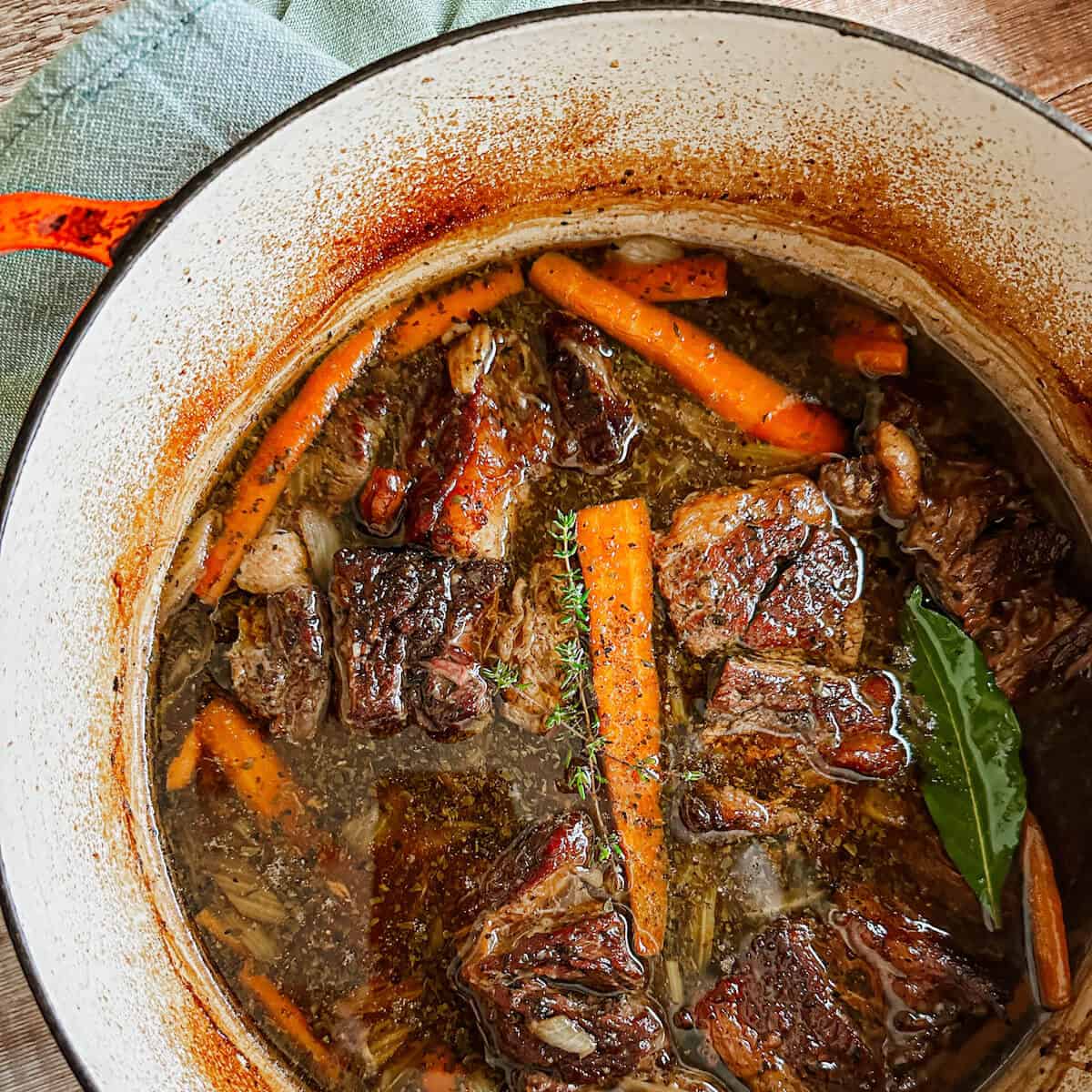
Main: Slow cooked short ribs braised in beer
Sides: Creamy mashed potatoes and green beans
Dessert: Chocolate olive oil mousse
If you have links to the actual recipes, use them. To be successful, AI needs as much information as possible. Then tell it:
- Number of guests
- Arrival time
- Dinner service time
- Your relevant kitchen equipment including how many hobs you have
- Whether you are cooking alone
- Your cooking ability
- Whether you need time to get ready
Top tip
Tell AI how your kitchen works. For example:
I have one oven, four hob burners, a food processor with multiple attachments and a blender. The oven can only fit two medium roasting trays at once. I have limited fridge space that cannot store large trays in it overnight. I only own one frying pan.
You get the idea!
Create the day-of schedule
Here is an example prompt I would use to create a dinner party prep schedule after giving it your menu and telling it about your kitchen:
I am cooking this menu for eight people. Guests arrive at 7pm and I want to serve dinner at 7.45pm. I am cooking alone and I am a confident home cook. I want to have at least 30 minutes completely free before guests arrive so I can shower and get dressed. Create a detailed cooking and preparation schedule working backwards. Allow buffers for unexpected problems.
Ask it for a prep list
Alongside your master schedule, ask for a prep list. This is a list of every single job that needs doing. Ask it to include things like laying the table and getting glassware ready. Having a shower. Lighting candles. Ask it to section things into jobs can be done in advance (e.g., chilling drinks, laying the table and chopping veg) and which things need to be done 'a la minute'. It is helpful for me to have a list in a different format you can simply cross things off of.
Ask AI to work backwards and include buffers
As an example, let's say you have guests arriving at 7pm. You should not be planning to finish cooking at 6.59pm! But you do need to work backwards from your service time, i.e, when you actually plan to serve the food. This forces the schedule to have an actual deadline. I always need time to change out of my kitchen clothes, pour myself a glass of wine and decompress before I change into host mode from chef mode.

And there will always be distractions, things that go wrong or interruptions from guests asking you for the tenth time what time it all starts. So make sure there is space in your schedule.
Ask AI to identify clashes
Once you've got a timeline, go through it and check for feasibility. This is one of the best uses of AI. It can look at the schedule as a whole rather than you having to hold every recipe in your head. Here's another prompt I like to use:
Analyse this schedule and identify any moments where I have too many things happening simultaneously. Pay particular attention to oven use, hob space, reheating and plating.
This is especially relevant if you have limited oven space. Or, if you are cooking fish but also need to cook a dessert. Don't do them at the same time! No one wants fishy dessert. Ask AI to create an oven schedule and a hob/stovetop schedule that works for your menu and equipment constraints.
Don't forget plating
A cooking schedule shouldn't stop when everything is cooked. Tell AI how you want to serve the food. Here's an example prompt:
Include plating and serving time in the schedule. I am serving eight people and will be plating the starter and dessert individually. The main course is being served feasting/family style but I need to put it onto platters.
Create an emergency buffer
I always want some spare time in a dinner party schedule.
Build 15 minutes of contingency time into this schedule and tell me where you would put it.
Then protect that time. If you finish early, wonderful! You've earned yourself a glass of wine. But if something goes wrong, you've got breathing room.
Create a "do not forget" list
Once the cooking schedule is finished, ask:
Create a final 15-minute pre-arrival checklist for my dinner party. Include food, drinks, table, lighting, music, bathroom and anything guests will notice when they arrive.
This is where you remember to:
- Put the butter on the table
- Take the cheese out of the fridge
- Light candles and turn on lamps
- Put the music on
- Put extra loo roll somewhere sensible
- Hide the mountain of recycling
- Put your apron away
The small things make a difference.

My master dinner party scheduling prompt
If you want to make this really easy, save this master prompt:
I am hosting a dinner party for [NUMBER] people. Guests arrive at [TIME] and dinner will be served at [TIME]. I am cooking alone. My menu is: [MENU]. My kitchen equipment is: [EQUIPMENT]. I have one oven with [DETAILS], [NUMBER] hob burners and [OTHER EQUIPMENT]. I need [NUMBER] minutes to shower, dress and get ready before guests arrive. I would like to prepare as much as possible the day before and earlier on the day. Create a detailed dinner party cooking schedule working backwards from serving time. Include what can be prepared the day before, morning-of tasks, final preparation, oven and hob scheduling, reheating, plating and serving. Identify any clashes or unrealistic timings. Build in at least 15 minutes of contingency time and tell me what I should do if I fall behind.
Then give the schedule a final human check. Because AI can organise a plan, but it doesn't know the physical reality of your kitchen.
It doesn't know that your roasting tray doesn't fit on the oven shelf when there is a casserole dish in there at the same time. It doesn't know that your freezer is so jam packed that you can't blast chill wine (or anything) in there. You do.
The secret to a relaxed dinner party
The best dinner party cooking schedule isn't the one with the most detail.
It's the one that breaks things down into easy to read sections and gives you breathing room and pulls as much forward as possible to give you space the other end. If you can prepare dessert the day before, do it. If one starter option can be assembled and plated before guests even arrive, choose that recipe. Because a good dinner party should and will have a little touch of chaos. Someone will arrive early. Someone will bring an unexpected bottle of wine. Or guest. Someone will announce some news that turns it into a celebration. And if you have a good schedule as your backbone, you can absorb all of this and enjoy the fun rather than be thrown off by it. Enjoy!


Comments
No Comments