

Home-Cured Beetroot Gravadlax (gravlax) is a recipe I come back to again and again. It's delicious, beautiful, and a lot easier than you might think! I love to serve it at dinner parties throughout the year, but it is particularly useful during the festive season when time is tight, as it is all prepped 48 hours in advance.
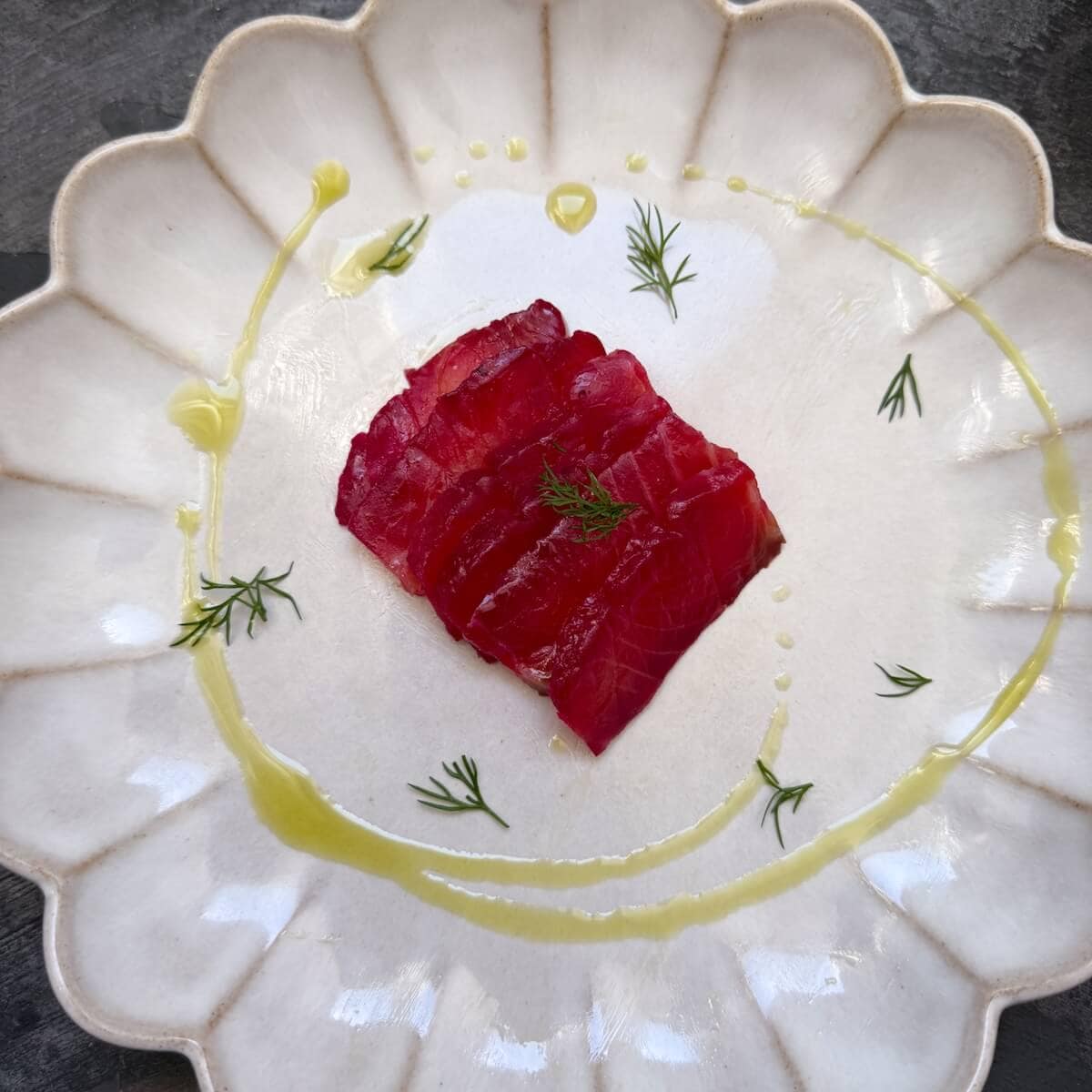
The beetroot adds a delicous earthy yet sweet layer of flavor and acts as a dye, imbuing the cured salmon with a vibrant pink/purple hue. It really is a showstopper, and as a private chef, I serve this all the time. I've experimented with different recipes and curing ratios, and have found a formula that works perfectly for firm, jewel-toned, glossy, beetroot-cured salmon gravadlax.
Jump to:
Tips on buying salmon for curing
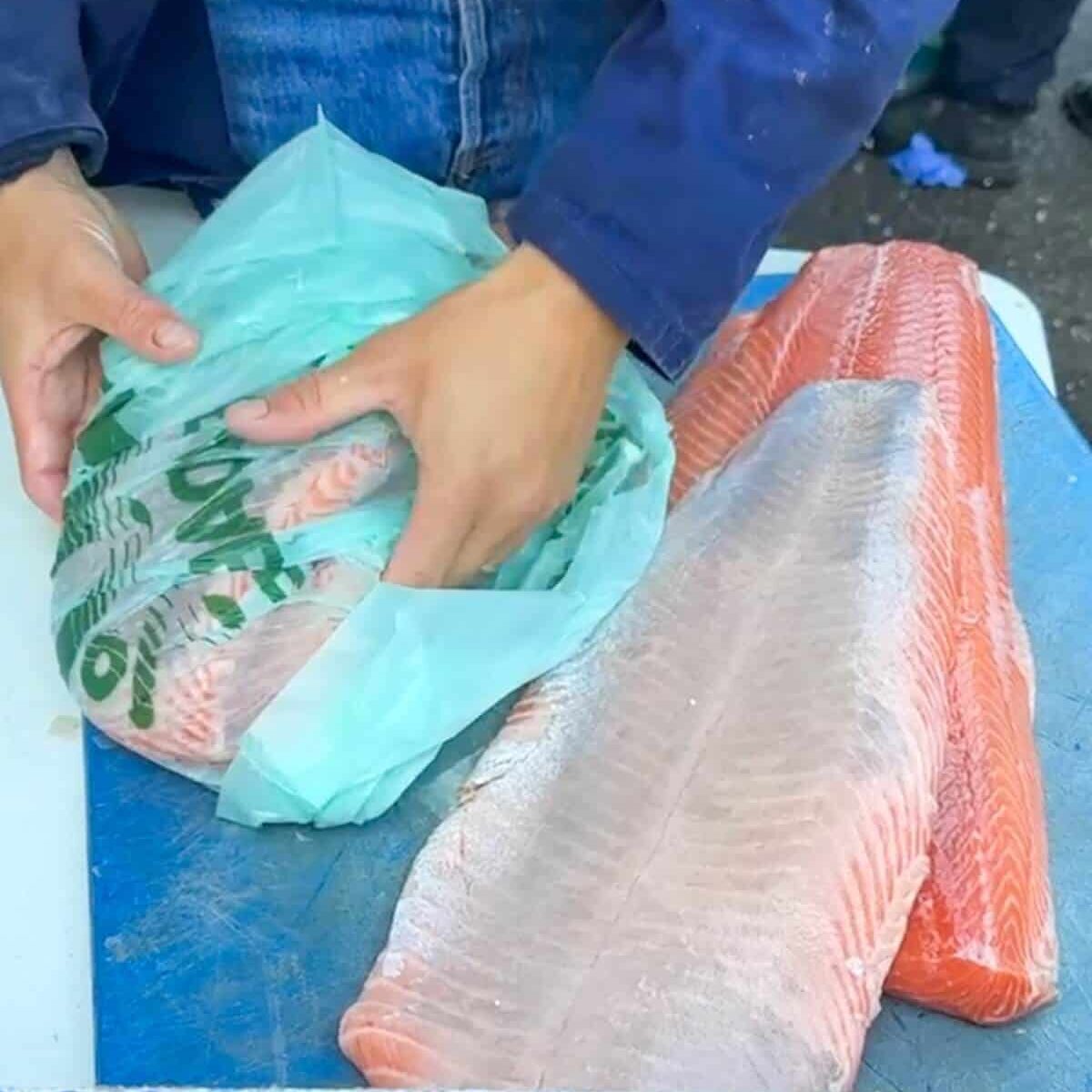
You need good-quality, very fresh salmon, and it will work best with a whole side. I prefer to use responsibly sourced farmed salmon. A side of salmon will weigh between 800g and 1.2kg, or 1.7 and 2.6 pounds. As a first course/starter, you will be able to feed 8-14 people from one side of salmon. If serving fewer people, ask your fishmonger to cut you a large piece of salmon rather than buying individual fillets.
It needs to be super fresh salmon, so ask for sushi grade (which is just an indicator for freshness), and I also ask for the skin and any pin bones to be removed. You don't want to be eating the skin, and it can be fiddly to remove it yourself if you don't have a fish filleting knife.
Is Gravadlax Raw?
Yes and no. It is never heated, but the curing process denatures proteins, and the salt firms the flesh and inhibits bacterial growth. A beetroot salt cure for salmon also firms the flesh and brings out the flavors of the fish and the other botanicals you use in the mixture. This is why it is safe for us to eat it even though it hasn't been cooked, but caution should, of course, be taken with pregnant women, the elderly, and anyone with compromised immune systems.
There's a printable recipe card at the bottom of this post with quantities and step-by-step directions for how to make beetroot gravadlax at home.
Cure ratios
The cure ratio is often debated, with some favoring a 2:1 salt-to-sugar ratio, but after testing, I prefer a 1:1 salt-to-sugar ratio. It cures and firms the flesh beautifully, but counteracts any harsh salinity, and the sugar binds some of the water, locking in moisture and lending a softer texture.
When it comes to the cure mix, don't just follow a recipe; you need to weigh your salmon to work out the correct weight of salt and sugar that you need. Overall, the combination of salt and sugar needs to total 50% of the salmon's weight.
For example, a 1kg side of salmon will need a 500 gram cure mix, consisting of 250 grams of salt and 250 grams of sugar. Or a 1-pound piece of salmon needs an 8-ounce cure mixture, with 4 ounces of salt and 4 ounces of sugar.
Make the beetroot cure for salmon
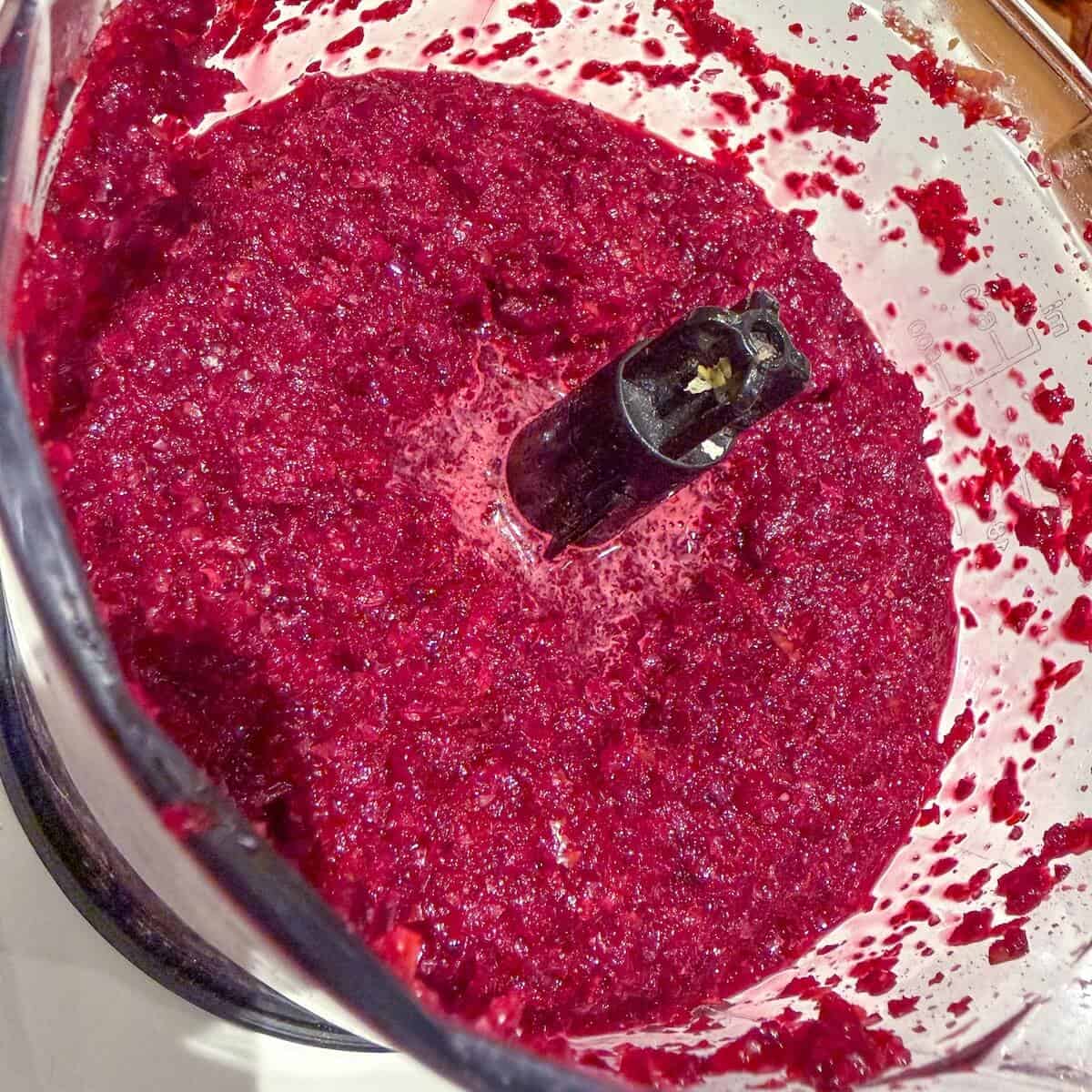
- To make the beetroot cure for salmon, blend your beetroot with the zest of an orange and juniper berries in a food processor until you have a paste. Mix it with the salt and granulated sugar.

- Spread half the paste over the bottom of a dish and lay the salmon on top, then cover the surface with the remainder. Make sure the whole surface is covered. Cover with food wrap and leave refrigerated for 24 hours. A lot of liquid will come out (see photo)!
After 24 hours, I carefully drain the liquid from the dish, flip the salmon over, and 'rearrange' the cure to make sure everything is covered again. This time, I press the food wrap right onto the surface of the fish to create an airlock and place another dish on top to weigh it down. Then I leave it in the fridge for another 24 hours. I generally cure for 48 hours total.
Should you cure under weight?
I don't usually weight down the gravadlax for the first 24 hours because doing so gives you a ringed (layered) color gradient, and slightly firmer texture at the edges. Weighting gravadlax lets the salt and pigment permeate faster at the surface, where the weights press it into the raw salmon. This is mainly down to personal preference, and if you like the appearance of the dark purple edge, then you can weight beetroot gravadlax for the whole of the curing process.
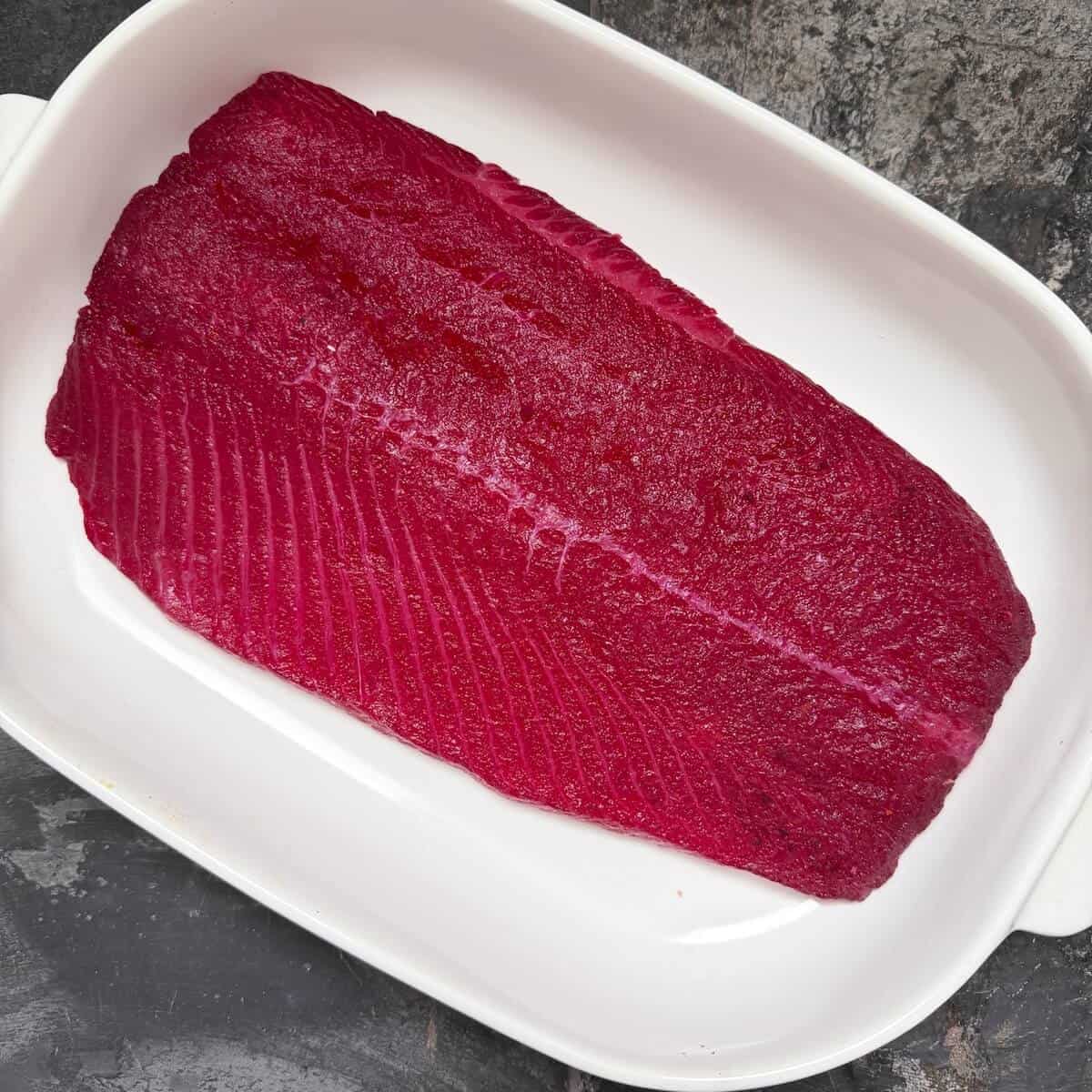
A few hours before you plan to serve, scrape the cure off the salmon and rinse it gently with cold water. Pat dry with paper towels and place it in a clean dish or onto a big plate. Cover with plastic food wrap and place back into the fridge. This extra time without the cure just lets it all settle a bit.
Top tip
Chill before you slice! When ready to carve the beetroot gravadlax, place it in the freezer for 20-30 minutes first to really firm it up. Slice across the grain at a shallow angle.
How to serve
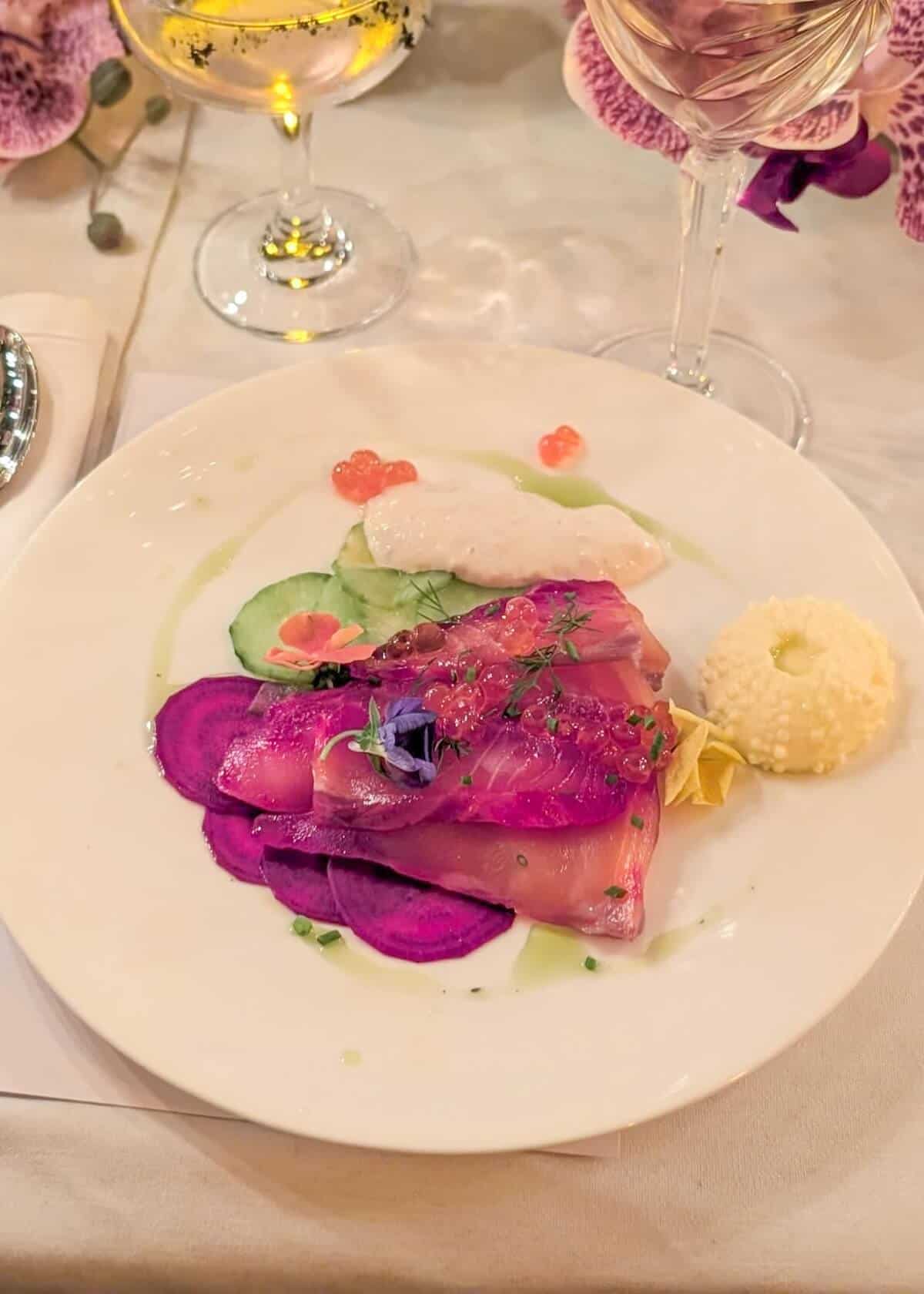
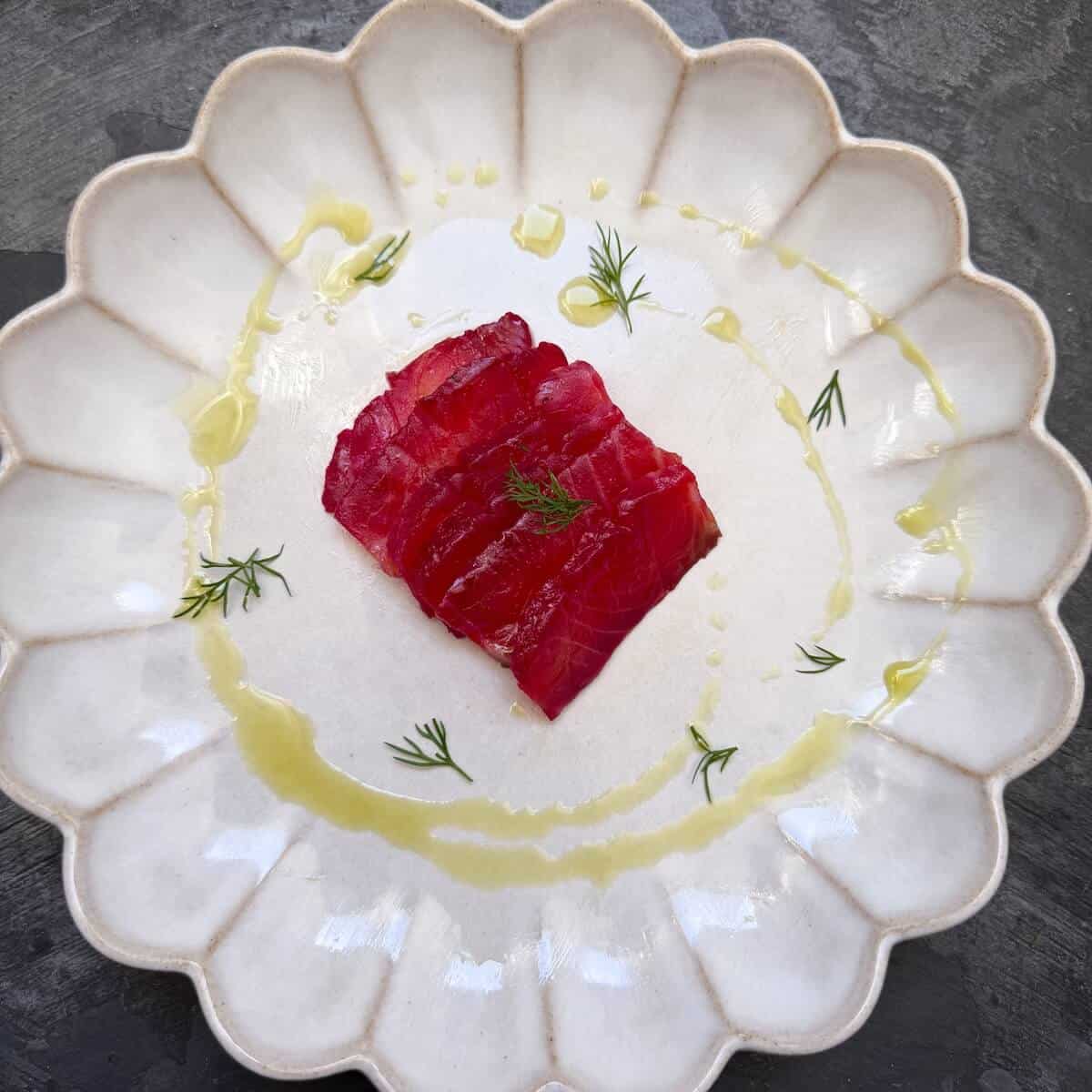
You can serve it plain with some scattered dill and a bread basket, or turn it into more of a spectacle like I have in the image above (that was for a client). I used a mandolin to slice beetroot and cucumber into paper-thin pieces, and then plated the beetroot gravadlax on top. I garnished it with edible flowers, dill oil, horseradish, and dill butter.
Wine Pairing
A robust white wine like a Chenin Blanc or a Pinot Noir will stand up to the beetroot and provide a lovely accompaniment to the salmon gravadlax.
Read my food and wine pairing tips for more suggestions!
What if I have leftovers?
You can keep cured beetroot gravadlax wrapped in food wrap for up to 5 days in the fridge. It will become a little firmer over time, so it's better eaten soon.
Can I freeze it?
Yes! Beetroot gravadlax (and any kind of gravlax) freezes really well. The fact that the beetroot salt cure has drawn out a lot of the water in the salmon means that smaller ice crystals form, and it keeps its texture and flavor. You can freeze gravadlax for up to 2–3 months with no real flavor loss.
The same goes for smoked salmon, and this is a feature I use to great effect with smoked salmon canapes, which can be made ahead and frozen in their entirety.
Expert tips on making beetroot gravadlax
- Flaky sea salt, or sea salt crystals, are best. Do not use fine table salt; it will permeate too fast, and the salmon will be too salty.
- You can use white granulated sugar, brown sugar, or a mix of both. Do not use powdered sugar (icing sugar) or liquid sugars like honey.
- Raw beetroot is better as it contains less moisture and will have a stronger flavor.
- Curing in two 24-hour blocks, where you drain off the liquid in between, works really well for me and avoids oversalting early on.
- Don't cure for too long! If you leave the salmon with beetroot cure on for too long, it can go hard or rubbery. Anything over 72 hours is too long, in my opinion.
- If you are using wild salmon, you must ensure it is frozen before curing to kill parasites. It will also require a shorter curing time (maximum 48 hours) and will have a firmer texture, so I recommend very thin slices.
- You don't have to use beetroot, you can make this recipe without it if you prefer! But I love the color it creates on the plate. I never saw a pretty plating I didn't love.
Equipment
Ratios really matter when curing salmon, so make sure you weigh everything using a digital scale for accuracy.
🙏🏻 If you try this recipe...
If you make this recipe, I'd love to hear how it went! Please leave a 5-star ⭐️⭐️⭐️⭐️⭐️ rating on the recipe card and consider leaving a comment as well. Your feedback helps other readers and is greatly appreciated.
Recipe
How To Make Beetroot Gravadlax
Equipment
Ingredients
- 1 kg (2.2 lb) salmon whole side, or partial side
- 250 grams (8.8 oz) salt flaky sea salt or sea salt crystals (not table salt)
- 250 grams (8.8 oz) sugar
- 2 beetroots
- 1 orange (zested)
- 2 juniper berries
Instructions
- Weigh your salmon, and then make your cure accordingly. The weight of the salt and sugar combined needs to equal half the weight of the salmon. See notes below.
- Blitz the peeled beetroot, orange zest, and juniper berries in a food processor and then mix them with the salt and sugar to form a paste.
- Spread half the paste on the base of a baking tray or dish, and lay the salmon on top, ensuring that the paste will cover the whole base of the fish.
- Spread the remainder of the paste over the surface of the salmon. Make sure it is completely covered.
- Cover the dish with food wrap and refrigerate the salmon for 24 hours.
- Drain the liquid out of the dish, and flip the fish over, ensuring again that the cure covers the whole surface of the fish. This time, place the food wrap directly onto the surface of the fish, forming a seal. Place a piece of parchment paper on top, and weight it down. I do this by placing a smaller dish on top of the salmon. Return to the fridge for another 24 hours.
- Gently scrape the beetroot cure off the salmon and rinse it in cold water. Pat dry with paper towels and return to a clean plate or dish. Allow it to rest, covered in the fridge, for another 2-3 hours before carving.
- To aid carving, freeze the gravadlax for 20-30 minutes and then slice against the grain using a sharp, non-serrated knife.



Comments
No Comments